Thursday, May 15, 2008

Random Shots of Daily Life and Stuff

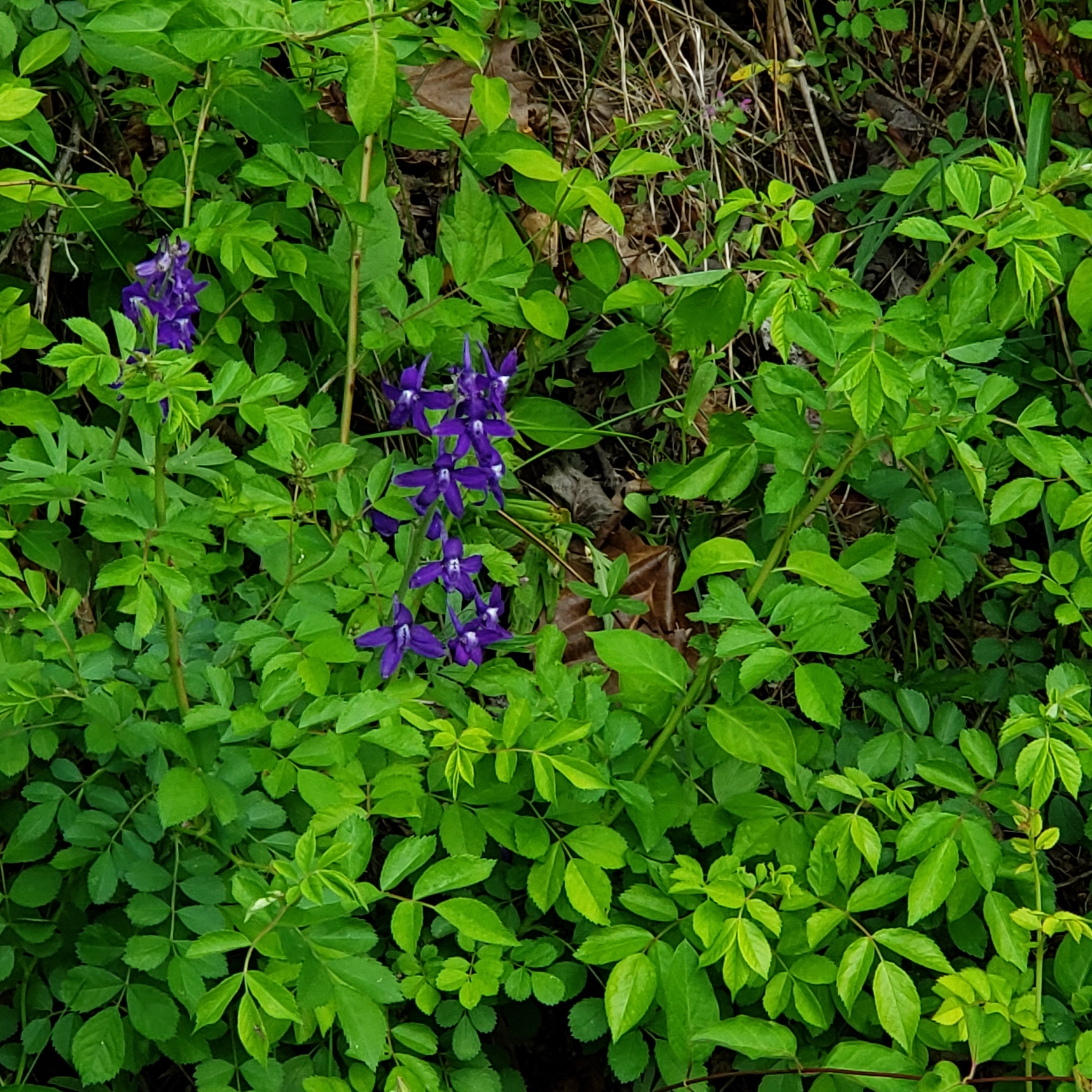
I wish I could say I took this photo, but it was taken by my son Aaron, near Fairmont, WV. I am determined to visit this spot with him as soon as my knee is up to a little 3-mile hike. Beautiful, Aaron, just beautiful.

Sprouts on the side of the peach tree by my front porch. There is something almost oriental about this photo--or does it just look that way to me?

Here come the girls! Haley and Hannah run down the driveway after school. Haley and I had to finish her social studies project on Iraq (which she chose of course--that's where her Dad is).
The finished product. Haley also had a little carved box from Iraq that held other items Derek brought home from his last tour there. And she had a voice recorder with a tape he'd made while in Iraq in 2003-2004. It was fascinating to listen to it in the context of today's news. Haley got 105 points for her display, and 100 points for her oral report. Way to go, Haley! I helped her find information (heck, I'm a librarian after all!) but she did everything else herself. Click on the picture below to enlarge the photos on the display.

The wygelia and dogwood blooming in the front yard. The blossoms are so heavy that the bush is bending to the ground now.
I said these were random shots! The morning sunlight streaming through the window on the shower was so pretty, I snapped a quick shot of it. It came out blurry, but I kind of like the way the blurring softens the picture.


Wednesday, May 14, 2008

Election Rant

Everyone is tired of hearing about the presidential election. I know I am. But I am frustrated too, for several reasons.


1. Once again, the media has stereotyped West Virginia as backwoods people with little education, low income, and oh let's not forget to mention, predominantly white. When did it become a problem to be a predominantly white state? I would bet Mississippians of both races feel the same about being noted as a predominantly African American state. Why does it matter what color we are? We're voters, plain and simple, and we have the right to make a choice.


The implication seems to be that since we're a mostly white state (94.9%), we must all be racist. Yet I didn't hear comments about the whiteness of Vermont (96.7% according to the US Census Office QuickFacts), or Maine (96.7%), or Idaho (95.2%). Why was race considered as a factor by the media in West Virginia (and North Carolina and probably a few others), but not in all states with skewed demographics?


And why is it okay for the media to make remarks like this? To me, it's discriminatory. Our votes were apparently unimportant because, well after all they're all dumb hillbillies who aren't educated and probably don't know to vote for the "right" candidate.


2. Who, in the media's opinion, is obviously Obama. He's a good man, and he's run a fantastic race. I may end up voting for him if he wins the party nomination. But the slant in his favor in the media is flagrant. The constant drone of "Hillary must drop out" that we hear day after day is meant to influence voters. When did the media stop reporting the news and begin trying to determine what the news will be? I find this trend alarming in the extreme.


The not-so-subtle message for West Virginians was "you might as well vote for Obama since Hillary is going to drop out anyway." When did the press take on the role of telling us who was going to win? Sure, poll after poll might indicate a candidate is in the lead; a candidate may move ahead in the voting in the primaries and become the obvious candidate. But the process, I thought, was that the actual candidate is selected at the convention. Which is still some time off.


3. And the rush to judgment is making West Virginians (and those in states who have not yet held primaries) feel that our votes are insignificant, that we don't count. "Oh well," analysts say, "Hillary won West Virginia but it doesn't matter."


Yes, it does. It matters to me and to everyone else who voted. We want our voice heard. Those still waiting to vote want their vote heard. Pundits decry the decline in voter turnout. Is it any wonder that people feel disenfranchised when we're told that the candidate is already chosen and our votes won't matter?


Amidst the cacophony of talking heads, West Virginians turned out in droves to cast votes. This even though we've heard for weeks that the Democratic candidate is really already chosen. We voted for the candidate we like, not the one we have been assured will be the one. We voted, even though the media repeated over and over that in the end our vote won't matter.


Maybe it's because we're stubborn mountaineers that we naively believe that our votes count, that we have a voice in this country. A small voice it might be, but it echoed loudly in these hills yesterday.

Spring on Joe's Run: Part 5


Wild ginger finds a fertile home in the crotch of a tulip poplar tree.


Above the ginger, the twin poplars soar into the blue above,


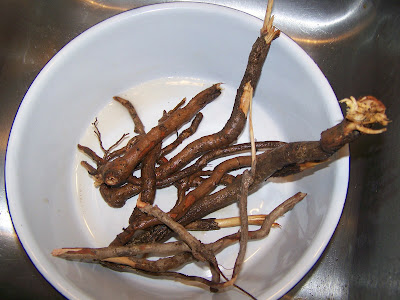
while a community of mayapples thrive in the shade below. Also known as mandrake because of the shape of its root, the mayapple has long been coveted for its medicinal uses. Settlers learned from the natives how to use this plant for ailments; today over $200 million worth of medications made from the mayapple are produced for use in chemotherapy for several types of cancer (source: Eastern/Central Medicinal Plants and Herbs by Steven Foster and James A. Duke--one of the Peterson Field Guides).

Orville's old home on the right fork of Joe's Run. The epitome of simplicity.

Tuesday, May 13, 2008

Rules of the (Country) Road; or, What They Don't Tell You When You Take Your Driver's License Exam

(This started from my reply to a post on Suzanne McMinn's blog; the more I thought about it, the more ideas occurred to me. Thanks, Suzanne!--btw, her blog is a hoot; check it out if you haven't visited there.)

What I've learned in the course of thirty-plus years of driving on a country road:

1. If you're coming down the hill and someone is coming up, you've got to move over and let 'em by.

2. The one closest to a wide spot on the flatter sections of road has to pull over or back up.

3. If you ain't from here, we'll figure it out by the way you stop dead in the road when another vehicle approaches, or by the way you hog the entire road and keep on coming, assuming that of course you have the right to do so. We'll move over or back up as needed, but you might not get the usual friendly wave. And you won't know to do the thing listed next:

4. If someone pulls over for you, you should wave or give a little tap on the horn to say thanks.

5. You should never ever use other sign language when you get irritated with someone who ain't from here and doesn't know the rules.

6. If you meet your neighbor on the road, you can both stop and talk until the next car comes. Then you should move on. Unless, of course, they get out of their car and join the conversation.

7. If you see someone with car trouble, stuck in the ditch or whatever, you must stop to help. If you can't help, you can commiserate or offer to go find someone with tractor and/or tools. You should never, ever simply wave and go by. That's rude and your payback will come when you're broke down, believe me.

8. Men must stop to look at deer. Women usually don't bother--the deer are in the road enough to see them quite well. Some men will have head-on collisions in the middle of a one-lane dirt road with total traffic of about 20 cars a day because they're looking at deer (ask my husband and the neighbor he met on our road). It's safer to let them stop and look.

9. Men must try to get out if it snows or floods. They just must, I don't know why. Even if they have nowhere to go, they will want to see if they can get through.

10. If it's dusty, slow down if you pass someone walking. Slow down if you're following another vehicle so you don't eat their dust. Slow down if you're passing someone's house and their kids are outside playing or if their doors and windows are open.

11. Be nice to the mailman and the school bus driver. Their jobs are tough enough without us giving them a hard time or riding on their bumpers.

12. If you find a tree down in the road first, it's your job to try to get it out of the path of vehicles of possible. That may mean a trip back to the house for a chain saw and tow chain, or tractor. If you're a woman, you can wait for the next guy with truck and tools (love those men!) if you find that you can't do the job yourself.

13. If it floods, you must go down to look at the water and visit with all the other neighbors who are there looking at the water and watching those who feel they must try to drive through. I've yet to see someone actually not get through. I have seen a few vehicles with water in the floorboards and other places not good for the continued life of said vehicle. Not mine of course. Of course not. Who would be so silly?

14. If it's between 9:30 and 12:30 on a Sunday morning, you will get behind church traffic heading up to Mount Hope Church, unless you remember to take the other fork of the road. Be patient. Follow them slowly and use the time to look at the wildflowers, deer, improvements neighbors have made to their places, and other points of interest along the way.

15. Always assume someone is coming around the blind curves and over the blind hills. They seldom are, but there is always that one time...

16. Teenagers almost always drive too fast too soon; they often violate rules #1, 2, 4, 5, 7, 10, 11 and 14. They also often require that others follow rule #7

I may have missed a few--anyone have any additions to this list?

Monday, May 12, 2008

Spring on Joe's Run: Part 4

White violets hide beneath taller plants around them. What beauties these are! I have been searching for the stemmed variety, once prevalent in the area now occupied by the community center, and for the sweet yellow ones, but so far I have seen neither. Since my bad knee doesn't allow me to venture far from the road, I may not see either this year.
Young violet leaves are excellent in salads, and the flowers make a lovely, light-flavored jelly. The purple blossoms are best for jelly because they will lend their pretty color to it.

Here's a recipe for violet jelly:

Wild Violet Jelly
2 cups violet flower juice (see instructions on how to make this below)
Juice of 1 lemon, or 1 tbsp prepared juice
1 package powdered pectin
4 cups sugar

To make the juice: Tightly pack 1 quart jar full of violet flowers. Fill with boiling water, cover and let steep in the refrigerator overnight. Strain off the juice and discard the flowers.

To 2 cups of this juice, add the lemon juice and powdered pectin. Stir to dissolve the pectin. Bring to a boil and add the sugar all at once. Return to a full rolling boil and boil for one minute.

Skim off foam, ladle into jars and seal. Makes approximately 5 1/2 pints.


Wild ginger (Asarum canadense) bloom. Can you spot its flower? This is probably the best-camouflaged blossom in the woods. If you look closely at the base of the leaf that is turning to the left, you will see a spike of pink. That is part of the blossom. The tiny greenish circle below the pink spike is the center of the flower, and the brown spike is another of the three spikes that surround the liquid-y center. Wild ginger is pollinated by ground insects that crawl into its center, and by ants that are attracted to the sticky coating on its seeds.


Early settlers used wild ginger as a ginger substitute, and it will smell like ginger should you happen to step in it in the forest. The settlers ate the ginger's root fresh (crushed), dried (powdered), or candied.

Native Americans used wild ginger for many medicinal purposes. Some people today believe the plant may have antibiotic properties. I love it for its compact, lush growth pattern and heart-shaped leaves--and also because it makes me search for its flowers.


Trillium (Trillium grandiflorum) was almost finished its bloom season when I found this one. As the flowers age, they turn from white to pink to a reddish-purple. There is nothing prettier to me than a hillside clothed in trillium, especially when the flowers begin changing shades.

Picking trillium may cause the loss of plants, according to several websites I found. The leaves contain vital nutrients and their loss can mean the death of the plant. Although in the past the leaves were used in salads, it doesn't seem worth the loss of so much beauty for a slight addition to a meal.

Also called Bethroot (a corruption, perhaps, of birthroot), Trillium was used by the Native peoples for women's health issues and in childbirth. The plant was considered a sacred plant, and only women used it. It is listed as an "at risk" species by forestencyclopedia.net.

Sunday, May 11, 2008

Migration Celebration 2008

The water looks cold as wind ripples its surface. It was a chilly start to a good day.


Today was the annual fund-raising and educational event for the Three Rivers Avian Center in Brooks, WV. I've been the storyteller and children's crafts coordinator for the past seven years, and each year the event gets better.
Center Director Ron Perrone discusses the peregrine falcon on his arm with a ypung visitor.


Today the weather was a challenge early on. It was cold! And since we were on the shores of the small lake at Little Beaver State Park, the wind coming over the water was downright icy. Our teeth chattered through the morning and the crowd was scarce as the clouds and winds combined for a threatening sky and chilly temps. But by one o'clock the sun broke through, the wind laid down and the people came out in droves.


Jackets, sometimes in layers, was the outfit of choice for everyone attending. By late afternoon the sun warmed things enough that the jackets came off.


I tried several new stories this year, and all, I think, are keepers. I searched for bird stories of all kinds and found many that worked with my puppets, as audience participation tales and as "just telling" stories. I've been buying those little plush birds that look very like the real birds and sing, so I have a fairly good collection now. Several found places in my stories. (No photos of the storytelling because I was kind of busy with telling.) The audience for stories was very small but highly interactive, and I completely enjoyed sharing the stories with them.


The afternoon craft was birdhouses, and we made them for almost 3 hours, until I ran out of supplies. Everyone loved them, and several parents made their own. These aren't "real" bird houses, but they were a big hit with kids and adults alike. I think they'll be a repeat craft next year, by popular demand.


The birds from TRAC were out in force: Spirit, the golden eagle, was his usual regal self, the owls demonstrated their head-turning abilities, and the pergrine falcon was quite self-contained and aloof.


Hannah and Haley were with us and explored the park, the raptors, and the variety of activities available. Dept. of Natural Resources staff were on hand to provide information and lead nature walks, and there were educational/interactive displays (like "Whose Scat is That?") that were big attractions.


Many people commented that this was their first year at the event, and they were very impressed. I hope they were impressed enough to donate to the avian center that does such good work, both rescuing raptors and educating the public about these magnificent birds.


Spring on Joe's Run: Part 3

I have many more photos from my trip up Joe's Run last week; I'll continue posting them as time allows.

A moss-covered rock provides background for a bright clump of wild geranium.


Joe's Run trickles shadily along its path to Mill Creek.

Dogwoods bloom along the banks of the Joe's Run watershed lake.

In the mid-1970's a dam was constructed to control runoff from rainstorms on Joe's Run and other creeks feeding into Mill Creek. The intent was to control flooding in Ripley, which had been a common occurrence over the years.

The plan works--sort of. While Ripley's flooding is greatly diminished, we find that we are flooded in more often than in the past. The dam, I believe, has slowed the run-off, trapping sediment in the creeks and runs leading into to it, which makes the streambeds shallower and flooding from even a minor storm more likely. Our floods (so far) have been only inconvenient, blocking the road in places so that we can't get home. No one's home has yet been affected, although several yards have been underwater in the past 10 years, creating nasty piles of branches and trash when the water recedes.


This lovely little ground cover has a long name--Chrysogonum. It's also called Golden Star in some places, and I think I like that name better. Although it grows wild here, it is often offered as a perennial ground cover by nurseries.


Another interesting boulder: this one is returning slowly to soil as ferns and other plants break down the sandstone base.